


If you spend enough time outdoors in the summer, you are bound to run into a situation that exposes you to the dangers of lightning. The mountains are especially prone, as they are either in or close to the base of the clouds, which makes for a shorter and easier electrical connection to the ground.
A study done in Colorado several years ago showed that lightning strikes peaks and ridges seven times more often than adjacent valleys. So, the odds are not in your favor when recreating at altitude in the summer months.
Close Calls
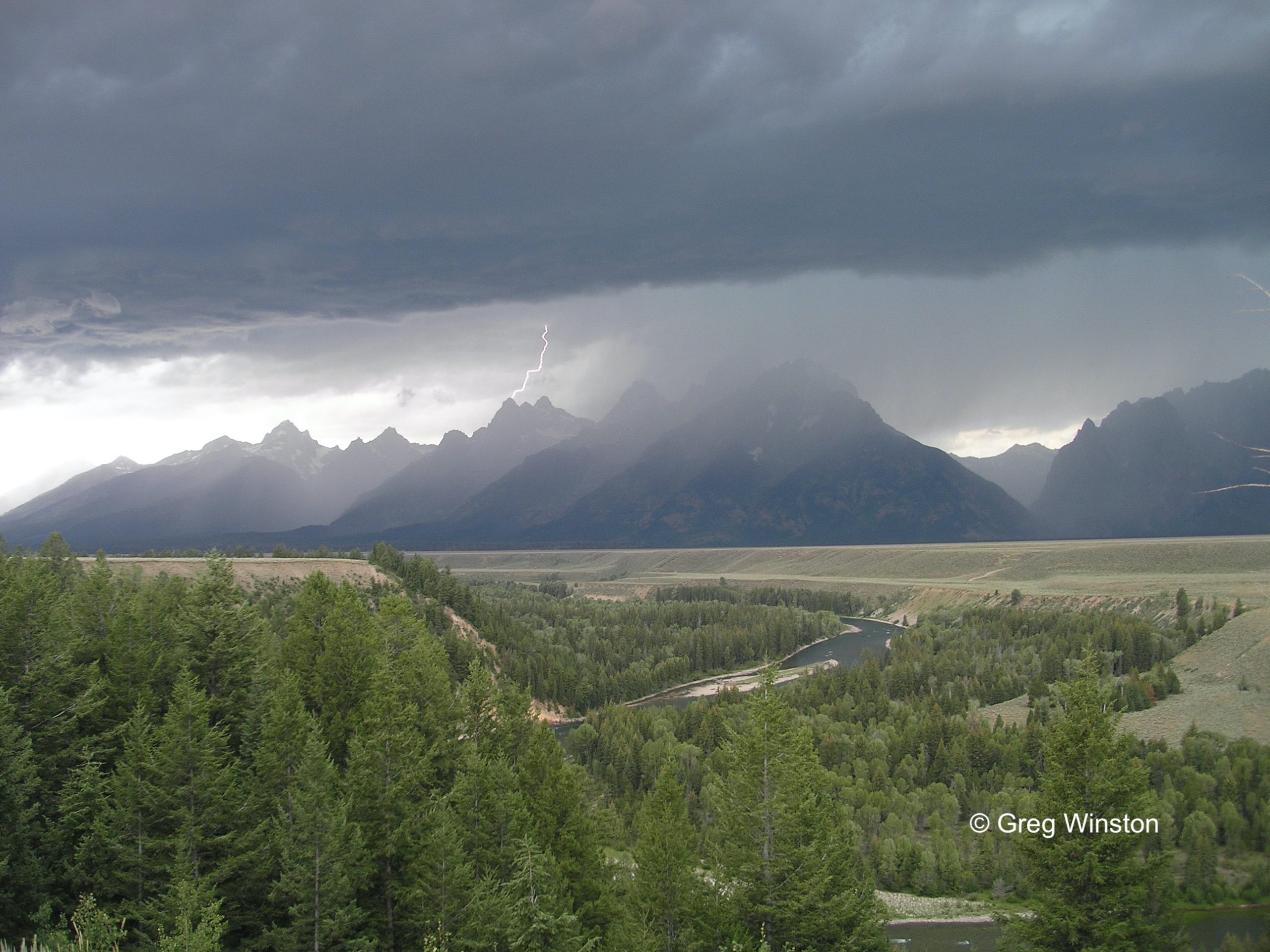
When I worked as a Climbing Ranger in the Tetons back in the 1980’s and 90’s I had a number of close encounters with lightning. One particular instance that remains vivid in my mind was on the north face of the Middle Teton, a pitch and a half below the summit. That’s when big cumulus clouds started to come into our view, off to east over the Gros Ventre mountains. By the time we topped out, we were in the thick of it; rain, hail, gusty winds, and lightning flashing all around us.
Needless to say, we made a hasty descent, rappelling down the Northwest side of the mountain, getting off the ridgetop as quickly as possible, as Thor (god of thunder) kept tossing hand-grenades at us. It was as nerve-wracking as being in a war zone during a shelling.
Even if you know a thing or two about the weather, spend enough time out in the mountains and at some point you’ll end up playing dodgeball with thunderstorms, on a day hike, a backpacking trip, or climbing a peak.
Another bit of advice, even a small probability of thunderstorms the forecast should be heeded. A 10 or 20 percent chance might quickly turn into a 100 percent chance where you are.
The Dangers of Lightning
It is truly a scary experience being caught outdoors in a thunderstorm. Even scarier when you are in the mountains, up in the base of the clouds. Statistically though, your chances of being killed by lightning are relatively low. On average, 30 to 40 people a year in the United States are killed by lightning, but 10 times that amount suffer injuries from lightning.
Part of the reason for the greater number of injuries is because a lightning bolt has about the same explosive power as a hand-grenade. The kill radius is about 25 feet, and the casualty or injury radius is about 50 feet.
The electrical energy and intense heat from lightning can hurt you in several different ways:
1) Direct Strike: This rarely happens, however, if you were unlucky enough to take a direct hit, it would be game-over, right then and there.
2) Conduction: Electrical energy travels through all metal objects, as well as graphite, carbon-fiber and water.
3) Side-flash: The heat & electrical current emanating outward through the air from a nearby lightning strike can cause cardiac arrest, concussive injuries, severe burns and/or nerve damage.
4) Ground Current: When lightning strikes the ground, the electrical current is carried outward, radially, in all directions along the ground surface. If that current reaches you, it can travel up through your body. Cardiac arrest, burns and nerve damage are all possible from ground current.
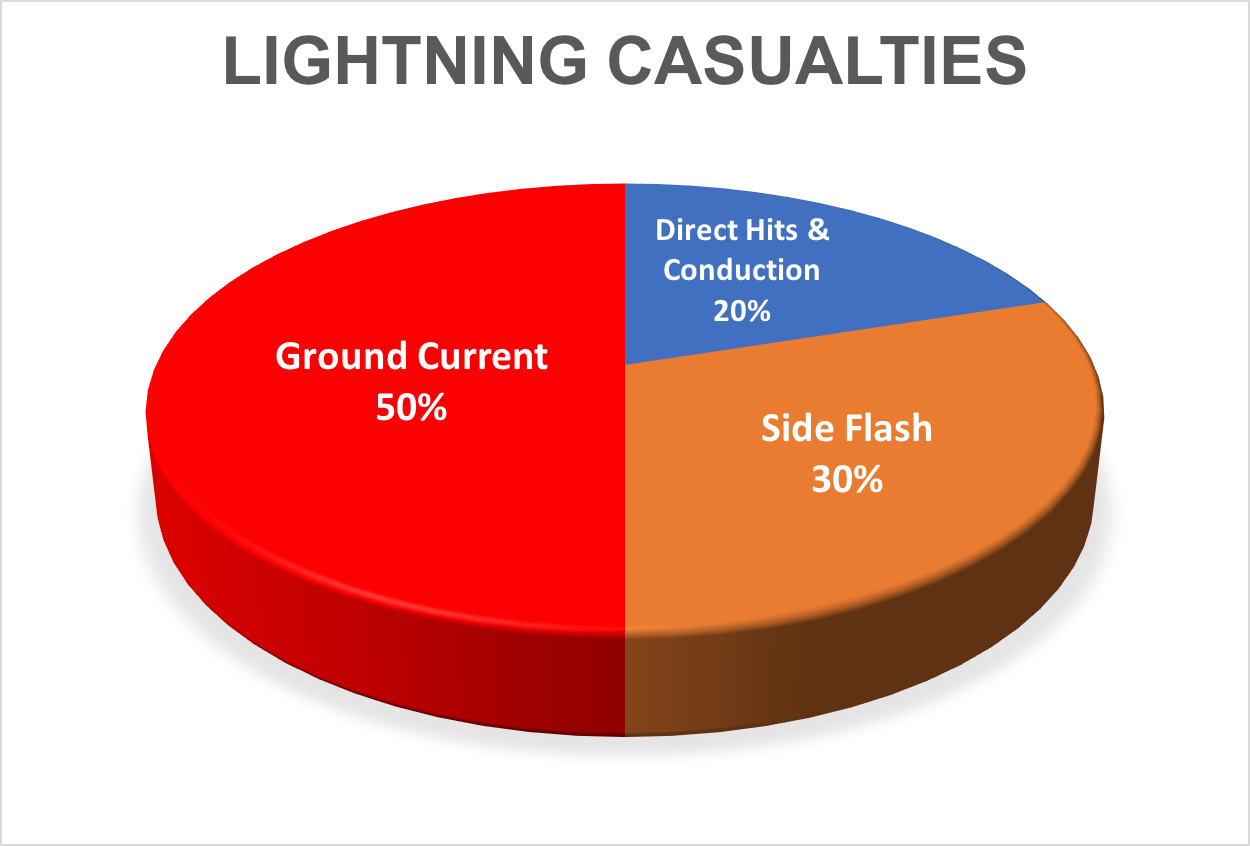
Conduction and direct hits, combined, account for only about 20-percent of all lightning casualties. Side-flash accounts for around 30-percent. Ground current alone accounts for around half, or 50-percent, of all lightning injuries and fatalities.
Where to Hide
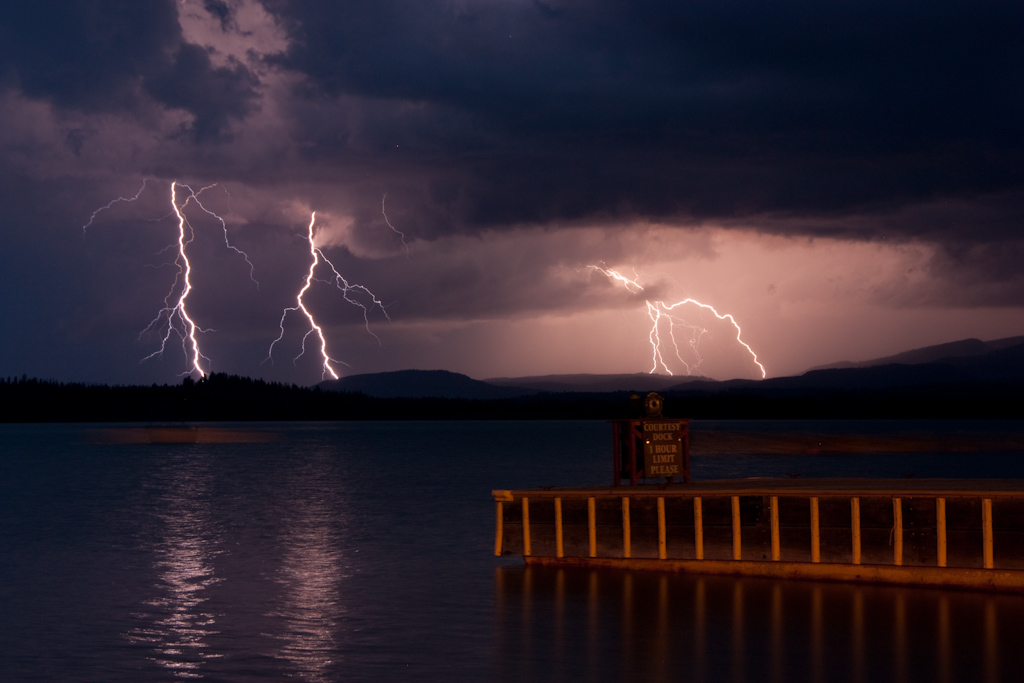
“When thunder roars, go indoors” is the mantra from the National Weather Service, which is good advice if you are in town. Out in the mountains, on the trail or on the lake or the river, we are often miles away from a totally safe shelter. So, here are a few tips on how to avoid becoming a lightning casualty when far from the safety of a building or a car.
1) Get off ridgetops. Avoid open meadows. Get off the lake or out of the water.
2) Never run for cover under a lone tree. A grove of trees of similar height is a better option. Be cognizant to not stand on top of tree roots.
3) Avoid direct contact with any metal or graphite objects that will conduct electrical current. Climbing gear, fishing poles, your bike, hiking poles, etc. Stash that stuff and get away from it while you wait it out.
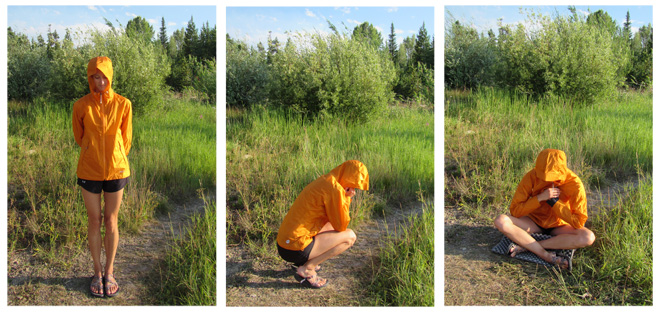
4) If you are stuck in an exposed location, stay put and protect yourself from ground currents by standing still with both feet together. This can prevent the ground current from traveling up through your body.
Squatting down to get lower will provide little additional protection, and it is a difficult position to hold for very long. Siting “Indian-style” is OK too, if inside a tent for instance. Sitting on an insulated pad will help keep you dry, but does not protect you insulate you from ground current. About all it will do is keep your butt from getting bruised if the ground current lifts you off the pad
5) If in a group, never huddle together. Spread out, 25 to 50 feet apart. That way when the grenade drops, fewer people in your party will be affected by the blast.
6) If all else fails, run like hell to get to a safer location, and hope whatever Thor is throwing down that day misses you by a wide margin.
Post by meteorologist Jim Woodmencey.
Portions of this post appeared in the Jackson Hole News & Guide on July 8, 2026.